
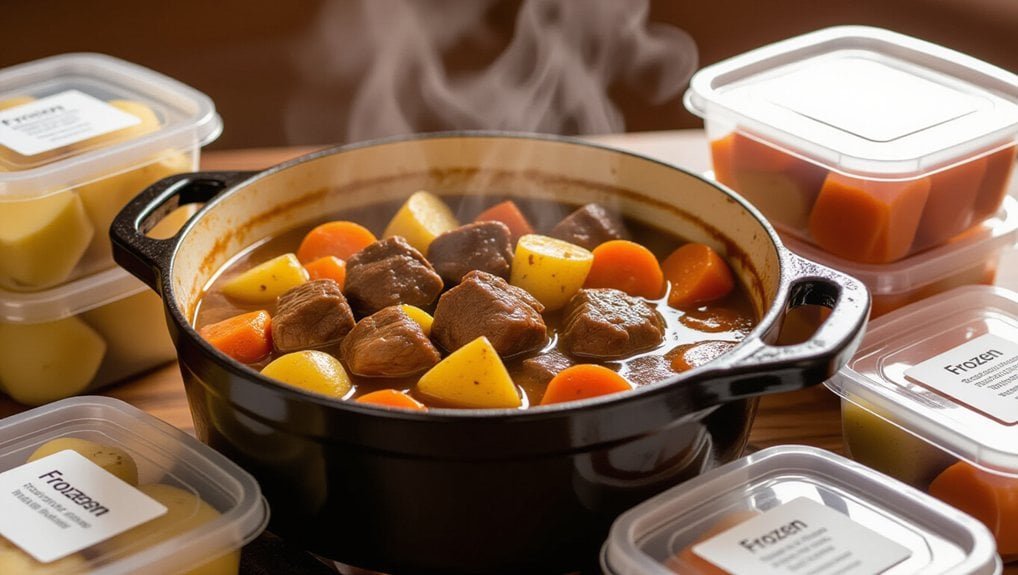
Beef Stew Recipe – Complete Guide

Making a flavorful beef stew is easier than you think! Start by searing well-marbled beef chuck pieces. Add aromatics like onions and garlic, then stir in tomato paste. Pour in beef broth and red wine, along with hearty veggies. Simmer until the beef is tender. You can thicken your stew using mash or a cornstarch slurry. Serve it with crusty bread or fresh salad for a complete meal. Discover tips and variations to enhance your stew even further!
Key Takeaways
- Sear well-marbled beef chuck in a hot pot, then add aromatics like onions and garlic for flavor enhancement.
- Incorporate beef broth, red wine, and hearty vegetables; simmer covered for 1.5 to 2 hours until tender.
- Use thickening techniques such as mashing vegetables or cornstarch slurry to achieve desired stew consistency.
- Freeze leftovers in airtight containers for future meals and reheat on stovetop or microwave, adjusting seasoning as needed.
- Pair beef stew with crusty bread, a fresh salad, or creamy mashed potatoes for a complete dining experience.
How To Make Beef Stew
Making a delightful beef stew is simpler than you might imagine, and just a few straightforward steps can lead to a hearty meal that warms the spirit.
Start by searing well-marbled beef chuck pieces in a hot pot, allowing them to develop a beautiful caramelization. This step improves the beef’s flavor, so don’t rush it!
Next, add aromatics like yellow onions and garlic, followed by a dollop of tomato paste to build a savory base. Pour in beef broth and red wine, then toss in hearty vegetables like carrots and potatoes.
Bring it to a simmer, covering the pot for at least 1.5 to 2 hours until the beef becomes tender. Optional additions like peas can be stirred in during the last few minutes to maintain their crisp texture.
Enjoy the rich flavors as they meld together, creating a comforting stew that’ll satisfy everyone at your table.
How To Thicken Beef Stew
After you’ve created your flavorful beef stew, you might find yourself wanting to enhance its consistency. To thicken beef stew, you can use several effective methods.
First, consider mashing some cooked vegetables into the stew; this not only adds flavor but also provides natural thickening.
Mashing cooked vegetables into your stew enhances flavor while naturally thickening the dish for a heartier consistency.
For a more controlled approach, try a cornstarch slurry. Mix equal portions cornstarch and cold water, then stir it into your simmering stew. Let it boil for 1-2 minutes to eliminate any starchy taste.
Alternatively, you can use flour or arrowroot powder as thickening agents; just create a paste with a bit of water before adding it in.
If your stew ends up too thick after refrigeration, simply reheat it and add broth or water until you reach your desired consistency.
Enjoy the rich, comforting texture of your perfectly thickened beef stew!
Can You Freeze Beef Stew?

Yes, you can freeze beef casserole, making it a fantastic choice for quick meals later on.
Just remember to use airtight containers to keep that rich flavor intact and avoid freezer burn.
When you’re ready to enjoy it again, thaw in the fridge overnight or use the microwave, stirring occasionally for even heating.
Freezing Method Tips
While you might think beef stew is best enjoyed fresh, freezing it can be a convenient method to preserve those hearty flavors for later. To guarantee great quality when freezing, follow these tips:
- Cool the stew to room temperature before freezing.
- Use freezer bags for single-serving portions; this helps with easy storage.
- Opt for airtight containers to prevent freezer burn.
- Store your stew for up to three months for ideal taste.
When you’re ready to enjoy your stew, simply defrost it in the refrigerator overnight.
If it’s too thick after thawing, a splash of broth or water can help restore the desired consistency. Freezing lets you savor delicious beef stew anytime!
Reheating Instructions
If you’ve frozen your beef stew for later enjoyment, reheating it properly is crucial to bringing back its rich flavors and comforting warmth. To reheat, first defrost it overnight in the refrigerator or use a microwave, stirring occasionally for even heating. When ready to warm, place it on the stovetop over medium-low heat. If it seems thick, add a splash of broth or water to improve the texture. Always let your stew cool to room temperature before refrigerating to maintain quality and safety. Finally, don’t forget to taste and adjust the seasoning before serving, as flavors may mellow during storage.
| Method | Tips |
|---|---|
| Stovetop | Use medium-low heat, add broth if thick |
| Microwave | Stir occasionally for even heating |
| Defrost | Overnight in the refrigerator |
| Storage | Use airtight containers |
| Seasoning | Adjust before serving |
What To Serve With Beef Stew
What can improve your beef stew experience? While your beef stew is a hearty meal on its own, pairing it with the right sides can raise the flavors and textures. Here are some fantastic options to think about:
- Crusty bread or biscuits for soaking up that flavorful broth
- Garlic Crescent Rolls that add a delightful garlic twist
- Creamy mashed potatoes or a mashed potato casserole for a hearty touch
- A fresh green salad to provide a revitalizing contrast
These accompaniments not only complement your stew but also create a balanced meal. The crusty bread allows you to savor every drop of the strong broth, while the garlic rolls bring a burst of flavor.
Creamy potatoes create a comforting bed for the stew, and a crisp salad lightens the meal, ensuring a delightful experience. Enjoy your beef stew with these perfect pairings!
Beef Stew Ingredients

When you’re gearing up to make a hearty beef stew, choosing the right ingredients is crucial to achieving that rich, comforting flavor.
Start with high-quality boneless beef chuck, known for its tenderness and marbling, and don’t forget to gather vital veggies like onions and potatoes.
Adding flavorful liquids and seasonings will enhance your stew, making it a cozy meal everyone will love.
Essential Ingredients Overview
To create a hearty and flavorful beef stew, you’ll need to gather a selection of vital ingredients that work together to build a rich and satisfying dish.
The main meat, boneless beef chuck, is prized for its tenderness and marbling, while important vegetables like yellow onions, carrots, and potatoes improve the stew’s texture.
Tomato paste thickens and elevates the broth, and a splash of dry red wine adds depth.
Don’t forget the seasonings that create a savory profile:
- Beef chuck for tenderness
- Yellow onions for sweetness
- Garlic for aromatic depth
- Bay leaves for herbal notes
These ingredients combine to formulate a comforting and delicious beef stew that warms the soul.
Quality Meat Selection Tips
Selecting quality meat for your beef stew is vital, as it directly impacts the dish’s overall flavor and tenderness.
Look for well-marbled cuts like boneless beef chuck, as the fat content improves tenderness and flavor during the long cooking process. Fresh cuts of chuck roast are ideal; they allow you to trim excess fat and cut the meat into uniform cubes for even cooking.
Always inspect the color—fresh beef stew meat should be a bright red with a firm texture, indicating quality and freshness. Avoid lean cuts, as they can lead to a tougher stew.
Step-by-Step Cooking Instructions
As you plunge into making your beef stew, start by heating a large Dutch oven with a splash of oil, ensuring it’s hot enough to create a rich sear on the beef chunks.
Work in batches to sear the meat, improving flavor through caramelization. Once browned, set the beef aside and sauté aromatic vegetables like onions, garlic, and celery until softened.
- Add the tomato paste and herbs for depth.
- Deglaze the pot with broth or wine to lift the browned bits.
- Combine the seared beef with the sautéed veggies, then add liquids.
Bring to a boil, then simmer covered for 1.5 to 2 hours until the beef is tender.
In the final stages, add heartier vegetables like potatoes and carrots, allowing the stew to simmer uncovered to thicken the broth and adjust seasoning before serving.
Enjoy the delightful aroma as it fills your kitchen!
Pro Tips and Storage

After savoring the comforting flavors of your homemade beef stew, you might want to contemplate how to elevate your culinary experience even further.
To boost flavor, consider preparing your stew a day in advance and refrigerate overnight. This allows the flavors to meld beautifully.
Store any leftovers in an airtight container in the fridge for up to four days. When you’re ready to reheat, do so over medium-low heat, adding broth or water if it thickens too much.
For longer-term storage, freeze portions of the stew for up to three months, making sure to label containers with the date to track freshness.
When it’s time to enjoy your frozen stew, thaw it in the refrigerator overnight.
Don’t forget to discard bay leaves before serving and adjust seasoning, as flavors can intensify during storage.
Enjoy your delicious, well-stored beef stew!
Beef Stew Variations
Whether you’re craving a classic dish or looking to tweak a traditional recipe, beef stew variations can bring exhilarating new flavors to your table.
Each variation maintains the rich flavor of beef stew while adapting to different cooking techniques and dietary preferences. Here are some captivating options to try:
- Slow-Cooker Red Wine Beef Stew: Enjoy a hands-off approach with deep, infused flavors.
- Keto Beef Stew: Perfect for low-carb diets, replace traditional vegetables with turnips or parsnips.
- Instant Pot Beef Stew: Achieve tender beef and flavorful broth in about an hour.
- Herb-Infused Variations: Experiment with rosemary or paprika for unique flavor profiles.
Frequently Asked Questions
Can I Use a Slow Cooker for Beef Stew?
Absolutely, you can use a slow cooker for beef stew! The benefits include improved flavors and meat tenderness.
Set your temperature for low and let it cook for 6-8 hours, or on high for 3-4 hours. You can easily adjust ingredient substitutions and try different recipe variations.
For sauce thickening, add a cornstarch slurry towards the end. Serve it with crusty bread or over rice for a comforting meal that’s perfect for meal prep!
What Is the Best Cut of Beef for Stew?
For the best beef stew, you can’t go wrong with chuck roast. Its marbling factors guarantee tenderness, essential for a flavorful dish.
Imagine simmering chuck roast in your slow cooker, releasing rich flavors as it cooks. While brisket tips and round steak can work too, chuck roast shines with its strong flavor profile.
Don’t forget to season well and consider pairing it with hearty vegetables for a complete meal that warms your soul!
How Do I Make Beef Stew Less Salty?
To make your beef stew less salty, start by adjusting your ingredients. Use low-sodium broth and incorporate salt alternatives like herbs or spices.
Improve acidity with a splash of vinegar or lemon juice to balance flavors. Experiment with fresh herbs for added depth.
If it’s already cooked, try adding diced potatoes or rice to absorb excess salt. Always taste as you go, and adjust cooking times and techniques for the best results.
Can I Add Wine to My Beef Stew?
When it comes to adding wine to your beef stew, you’re really hitting the nail on the head!
Different wine varieties can improve the stew flavors beautifully. Opt for a red wine with lower alcohol content to maintain an acidity balance.
Consider marinating your beef beforehand for deeper taste improvement. Serve it alongside hearty bread or roasted vegetables for a perfect meal pairing.
Recipe variations are endless, so don’t hesitate to experiment!
How Long Does Beef Stew Last in the Fridge?
Beef stew lasts about 3 to 4 days in the fridge, so keep an eye on your leftovers management.
For ideal stew freshness, store it in airtight containers. Check for spoilage signs like off smells or unusual textures before reheating.
If you’ve made a big batch during meal prep, consider freezing portions to extend its shelf life.
Just remember to thaw it safely before reheating for the best taste and food safety!
Conclusion
So there you have it—your beef stew masterpiece, ready to impress even the most discerning of taste receptors (or at least your dog, who’ll think it’s gourmet). Remember, this isn’t just a meal; it’s a culinary journey filled with tender chunks of beef and veggies that are practically begging for your attention. So go ahead, ladle out that stew, and bask in the glory of your kitchen prowess. Just don’t forget to save some for leftovers—because you’re definitely going to need it!