

Savory Butternut Squash and Sage Soup: A Cozy Fall Favorite
As the leaves turn golden and the air becomes crisp, there’s nothing quite like a warm bowl of Savory Butternut Squash and Sage Soup to embrace the essence of fall.
The velvety texture of butternut squash combined with the earthy aroma of sage creates a delightful harmony that warms the soul.
This recipe has been a cherished family favorite for generations, often paired with homemade bread on chilly evenings.
Whether you need a comforting meal after a long day or a show-stopping starter for your autumn gathering, this soup is sure to impress.
The History and Cultural Significance
• Savory Butternut Squash and Sage Soup traces its origins to Native American cuisine, where butternut squash was a staple ingredient.
• The dish evolved over decades as European settlers incorporated their own flavors and techniques, eventually becoming a beloved comfort food.
• In many American households, this soup traditionally appears at Thanksgiving and harvest celebrations, symbolizing gratitude and the bounty of the season.
• While many variations exist across different regions, the authentic version maintains its creamy texture and balanced flavor profile that sets it apart from imitations.
Recipe Overview
Nutritional Information (per serving)
Ingredients
Essential Equipment Guide
Immersion Blender: This tool is essential for achieving the smooth, creamy consistency characteristic of butternut squash soup. While a standard blender can work, an immersion blender allows you to puree the soup directly in the pot, minimizing mess and reducing the risk of splatters. Look for a model with a powerful motor and a comfortable grip for ease of use.
Heavy-Bottomed Pot: A heavy-bottomed pot ensures even heat distribution, preventing the soup from scorching. While any large pot can work, one made from stainless steel or enameled cast iron is recommended for its durability and heat retention. Choose a size that accommodates all ingredients comfortably.
Cutting Board and Sharp Knife: A good cutting board and a sharp knife are vital for efficiently chopping vegetables, ensuring even cooking. A board with a non-slip surface and a knife that fits comfortably in your hand will make prep work safer and more enjoyable.
Preparation Methods
Chopping Techniques: Proper chopping techniques ensure even cooking and a uniform texture in your soup. Use a sharp knife to make clean cuts, and consider using a claw grip with your non-dominant hand to protect your fingers. Aim for consistent cube sizes, especially for the butternut squash, to facilitate even cooking.
Sautéing: Sautéing the onions and garlic before adding the other ingredients builds a flavorful base for your soup. Heat your olive oil over medium heat and add the onions first, allowing them to soften before adding the garlic. Stir frequently to prevent burning and enhance the depth of flavor.
Pureeing: Pureeing is essential for achieving the desired creamy texture of this soup. If using an immersion blender, blend until smooth directly in the pot. If using a traditional blender, let the soup cool slightly before blending in batches to avoid splatter.
Step 1: Prepare Ingredients
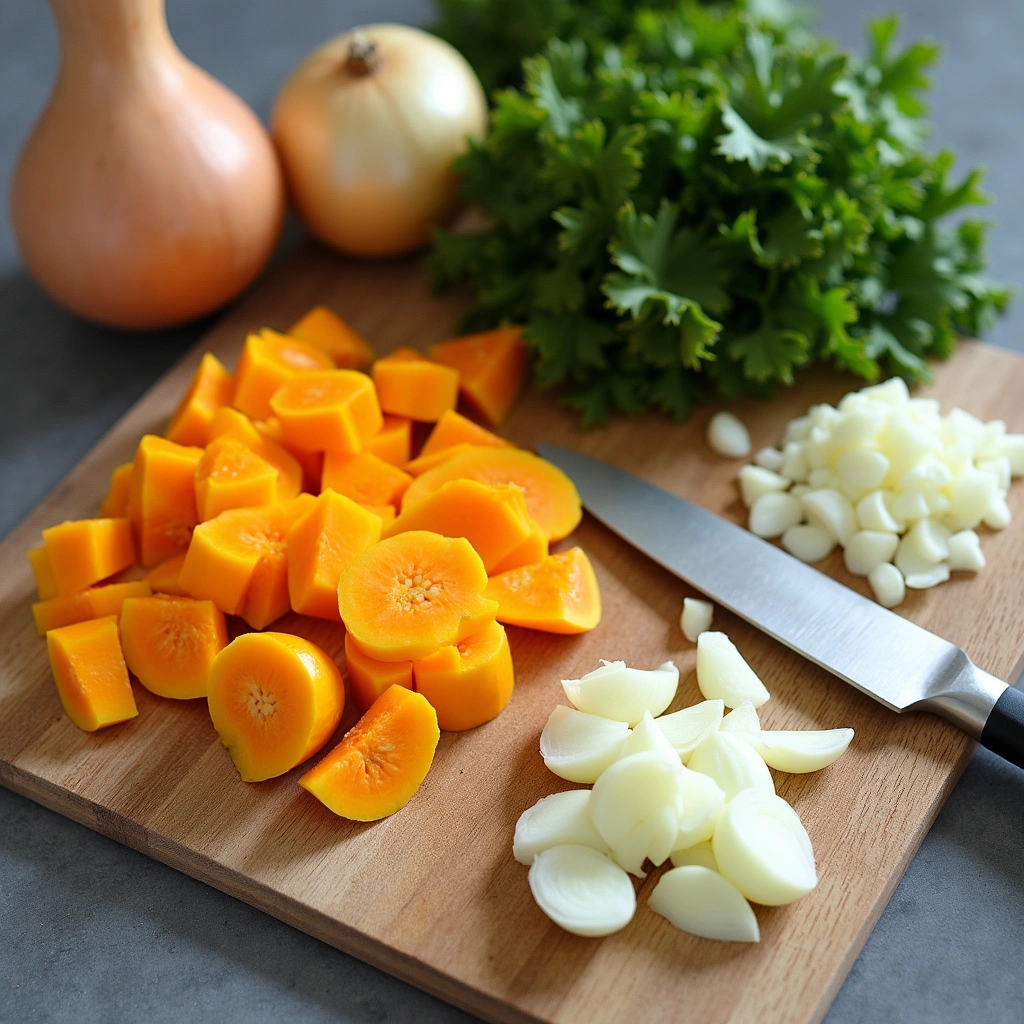
Start by gathering all your ingredients, ensuring you have everything within reach.
Wash and peel the butternut squash, then cut it in half and scoop out the seeds.
Cube the squash into even pieces to ensure uniform cooking.
Dice the onion and mince the garlic, preparing them for sautéing.
Step 2: Sauté the Aromatics

In a heavy-bottomed pot, heat the olive oil over medium heat.
Add the diced onion and sauté until translucent, about 5 minutes.
Add the minced garlic and sauté for an additional minute, stirring frequently to avoid burning.
The mixture should be fragrant and lightly golden.
Step 3: Add the Vegetables

Once the aromatics are ready, add the cubed butternut squash and diced carrots to the pot.
Stir well to combine all the ingredients, allowing them to absorb the flavors.
Cook for about 5 minutes, letting the vegetables soften slightly.
You should see the squash beginning to lose its firmness.
Step 4: Pour in the Broth

Add the vegetable broth to the pot, covering the vegetables completely.
Raise the heat to bring the mixture to a gentle boil.
Once boiling, reduce the heat to a simmer and cover the pot.
Let it cook for about 20 minutes, or until the squash and carrots are tender.
Step 5: Season the Soup

After 20 minutes, remove the lid and stir in the dried sage, salt, and black pepper.
Taste and adjust seasoning as necessary, adding more salt or pepper to your preference.
Allow the soup to simmer for an additional 5 minutes to meld the flavors.
You should smell the fragrant sage blending beautifully with the soup.
Step 6: Puree the Soup

Using an immersion blender, puree the soup until smooth and creamy.
If using a traditional blender, let the soup cool slightly before blending in batches.
Blend until completely smooth, ensuring there are no chunks remaining.
The final texture should be silky and homogenous.
Step 7: Serve and Garnish

Ladle the hot soup into bowls, filling them generously.
Consider garnishing with a drizzle of olive oil or a sprinkle of fresh sage leaves.
Serve immediately with a side of crusty bread for dipping.
The presentation should be inviting and warm, perfect for fall.
Step 8: Enjoy Your Meal

Take a moment to appreciate the colors and aroma of your soup before tasting.
Savor the deep, comforting flavors of the butternut squash and sage with each spoonful.
Enjoy this cozy dish with loved ones, making it a perfect meal for chilly evenings.
Feel free to share your experience and any variations you tried!
Critical Timing and Temperature Guide
Cooking the Vegetables: Cook the squash and carrots for about 20 minutes, or until they are easily pierced with a fork. Look for tender, but not mushy, vegetables. A common mistake is to undercook the vegetables, which can result in a chunky soup rather than a creamy one.
Simmering the Soup: After adding the broth, bring the soup to a gentle boil and then reduce to a simmer. Maintain a simmer for about 20-25 minutes to allow the flavors to meld. Avoid boiling too vigorously, which can affect the texture of the soup.
Pureeing: When blending the soup, ensure it’s not too hot to avoid splattering. If using a traditional blender, blend in batches and allow steam to escape. A common mistake is to fill the blender too full, which can lead to mess and uneven blending.
Pro Tips for Savory Butternut Squash And Sage Soup
• Ingredient Selection: Choosing ripe, fresh butternut squash makes a significant difference in flavor and sweetness. Look for squash that feels heavy for its size and has a hard, smooth skin.
• Preparation Secret: Roasting the butternut squash before adding it to the soup can enhance its natural sweetness and add depth of flavor.
• Temperature Management: Keep your broth warm before adding it to the pot. This helps maintain cooking temperature and reduces the overall cooking time.
• Texture Enhancement: For a restaurant-quality texture, consider adding a splash of cream or coconut milk just before serving for extra richness.
• Flavor Layering: Enhance the soup’s flavor by adding a pinch of nutmeg or cinnamon along with the sage for a warm, aromatic touch.
• Make-Ahead Strategies: You can prepare the soup base a day in advance and store it in the fridge. Reheat gently before blending for best results.
• Restaurant-Quality Finishing Touches: Garnish with toasted pumpkin seeds or a drizzle of balsamic reduction for an elegant touch.
• Equipment Optimization: Ensure your blender is high-powered to achieve a silky consistency in the soup.
Troubleshooting Common Issues
• Texture Too Chunky: This can happen if the vegetables aren’t cooked long enough. Ensure you simmer until tender, and blend thoroughly until smooth to avoid any lumps.
• Flavors Unbalanced: If the soup tastes bland, it may need more salt or seasoning. Always taste and adjust before serving, adding seasoning gradually to achieve the desired flavor.
• Too Thick: If your soup is too thick, add more vegetable broth or water until reaching your preferred consistency. Stir well to combine.
• Too Thin: If the soup is too thin, simmer uncovered to reduce it further or blend in a small amount of cooked potato for added thickness.
• Overpowering Sage Flavor: If the sage flavor is too strong, balance it with a splash of cream or coconut milk to mellow the taste. You can also add a touch of sweetness, like maple syrup, to counteract the bitterness.
Variations and Regional Differences
• Italian Variation: In Italy, this soup is often enhanced with pancetta and served with a sprinkle of Parmesan cheese on top, adding a savory depth to the dish.
• Thai Variation: A Thai-inspired version might include coconut milk and red curry paste, giving it a spicy kick and creamy texture that contrasts nicely with the sweetness of the squash.
• Spiced Version: Some regions add warming spices like cumin and coriander for an aromatic twist that complements the butternut squash’s sweetness.
• Modern Interpretations: Contemporary adaptations may include adding kale or quinoa for added nutrition and texture while maintaining the essence of the classic recipe.
Food Science Behind the Recipe
• Maillard Reaction: This is the chemical reaction that occurs when the sugars in the butternut squash caramelize during cooking, creating complex flavors and a deeper color. Understanding this can help you achieve a richer taste in your soup.
• Emulsification: When adding cream or coconut milk, emulsification helps achieve a smooth, cohesive mixture that enhances the soup’s texture. Slowly incorporate these ingredients to prevent separation.
• Flavor Development: Allowing the soup to simmer helps develop deeper flavors through the extraction of natural sugars and oils from the vegetables. Longer cooking times generally yield a more flavorful result.
Frequently Asked Questions
What’s the most common mistake people make when preparing Savory Butternut Squash and Sage Soup? The most common mistake is not cooking the vegetables long enough, resulting in a chunky texture. Ensure the squash and carrots are tender before blending for a creamy soup.
Can I prepare components of this dish in advance? Yes, you can chop the vegetables and store them in the refrigerator for up to two days. The soup can also be made a day in advance and reheated before serving.
How do I adapt this recipe for dietary restrictions? For a vegan version, use vegetable broth and omit any cream. You can substitute coconut milk to maintain creaminess.
What’s the best way to store and reheat leftovers? Store leftovers in an airtight container in the fridge for up to 4 days. Reheat gently on the stovetop or in the microwave until heated through.
Can I freeze this dish? Yes, the soup freezes well for up to 3 months. Allow it to cool completely before transferring to a freezer-safe container, and thaw in the fridge overnight before reheating.
What wine or beverages pair best with this dish? A light-bodied white wine, such as Sauvignon Blanc or a dry Riesling, pairs beautifully with the soup’s sweetness.
How can I scale this recipe up for a crowd? To scale up, simply multiply each ingredient by the number of servings needed, ensuring you have a large enough pot to accommodate the increased volume.
What side dishes complement this recipe best? A simple green salad or warm crusty bread are excellent accompaniments, balancing the richness of the soup.
How do professional chefs elevate this dish for restaurant service? Chefs often incorporate unique garnishes, such as microgreens or flavored oils, and serve the soup in elegant bowls to enhance the dining experience.
Serving and Presentation Guide
• Traditional Presentation: Serve the soup in rustic bowls, garnished with a drizzle of olive oil and freshly cracked black pepper. Consider adding a sprig of sage for visual appeal and aromatic enhancement.
• Modern Plating Ideas: Create a more contemporary look by swirling in cream or coconut milk, and topping with toasted pumpkin seeds or croutons for added texture.
• Accompaniment Suggestions: Pair the soup with a fresh arugula salad dressed with balsamic vinaigrette or a warm baguette to complement the flavors.
• Special Occasion Presentation: For special occasions, consider serving the soup in small shot glasses or elegant cups as a starter, garnished with a sprinkle of crispy shallots or herbs.
Conclusion
Savory Butternut Squash and Sage Soup is more than just a meal; it’s a warm embrace on a chilly evening.
I encourage you to try this recipe, celebrating the flavors of fall with every spoonful.
May it bring comfort to your table and warmth to your heart.




This butternut squash and sage soup sounds amazing! I’ve been looking for a warm recipe to try this fall. Do you have any tips for making it extra creamy?
I love the idea of adding sage! It reminds me of the time I made a soup and accidentally used way too much thyme. Let’s just say it was a herbal explosion! 😂
Did you know that butternut squash is packed with vitamins A and C? It’s like a tasty health booster in a bowl! Who knew soup could be so good for you?
I remember the first time I tried butternut squash soup at a friend’s house. I thought it was pumpkin soup and was surprised when it had a sweeter taste! Now, I can’t stop making it every fall!
If you’re looking to spice things up, try adding a pinch of nutmeg to the soup! It gives it a warm, cozy flavor that’s perfect for chilly days.