How to Make Authentic Phyllo Dough: A Traditional Greek Baking Guide
How to Make Authentic Greek Phyllo Dough From Scratch
Creating your own phyllo dough at home might sound intimidating, but this traditional Greek baking technique is surprisingly accessible with the right instructions. This paper-thin pastry forms the foundation of countless Mediterranean desserts and savory dishes that have been enjoyed for centuries.
:max_bytes(150000):strip_icc()/AR-259481-homemade-phyllo-Dough-DDMFS-4x3-Beauty-171dc6fc9914413c8c7a0ee3db32423a.jpg)
Why Make Phyllo Dough at Home?
While store-bought frozen phyllo sheets are convenient, nothing compares to the satisfaction of creating these delicate, tissue-paper-thin layers yourself. Homemade phyllo offers:
- Superior texture – fresher, more pliable sheets
- Authentic flavor – without preservatives or additives
- Complete control – adjust the thickness to your preference
- Impressive skill – impress friends and family with your culinary prowess
The Perfect Phyllo Dough Ingredients
One of the beautiful aspects of traditional phyllo dough is its simplicity. You’ll need just a few basic pantry staples:
- 2 cups all-purpose flour, plus extra for kneading and rolling
- 1/2 teaspoon fine sea salt
- 2/3 cup warm water
- 2 tablespoons olive oil
- 1 tablespoon white vinegar (helps develop elasticity)
- Cornstarch for dusting between layers
Nutrition (per serving): 178 calories, 33g carbohydrates, 4g protein, 3g fat, 1g saturated fat, 148mg sodium
Essential Equipment for Phyllo Success
Before diving in, gather these tools for the best results:
- Large, clean work surface (preferably marble or wood)
- Rolling pin (a thin dowel-style works best)
- Pastry brush for oil application
- Clean kitchen towels
- Sharp knife or pizza cutter
- Measuring cups and spoons
Step-by-Step Homemade Phyllo Dough Recipe
- Prepare the dough: In a large mixing bowl, whisk together flour and salt. Create a well in the center and pour in warm water, olive oil, and vinegar. Mix with a fork until shaggy, then knead by hand for 8-10 minutes until smooth and elastic. The dough should be soft but not sticky.
- Rest the dough: Form the dough into a ball, lightly coat with olive oil, wrap in plastic, and let rest at room temperature for at least 1 hour (or up to 2 hours). This crucial resting period allows the gluten to relax, making the dough easier to stretch.
- Prepare your workspace: Dust a large, clean surface with flour. Have additional flour and cornstarch nearby for dusting as you work.
- Divide the dough: Cut the dough into 8 equal portions. Keep pieces covered with a slightly damp towel to prevent drying while you work with one piece at a time.
- Begin rolling: Working with one piece, shape it into a disc and dust lightly with flour. Using a rolling pin, roll it into a thin circle, rotating frequently and dusting with flour as needed to prevent sticking.
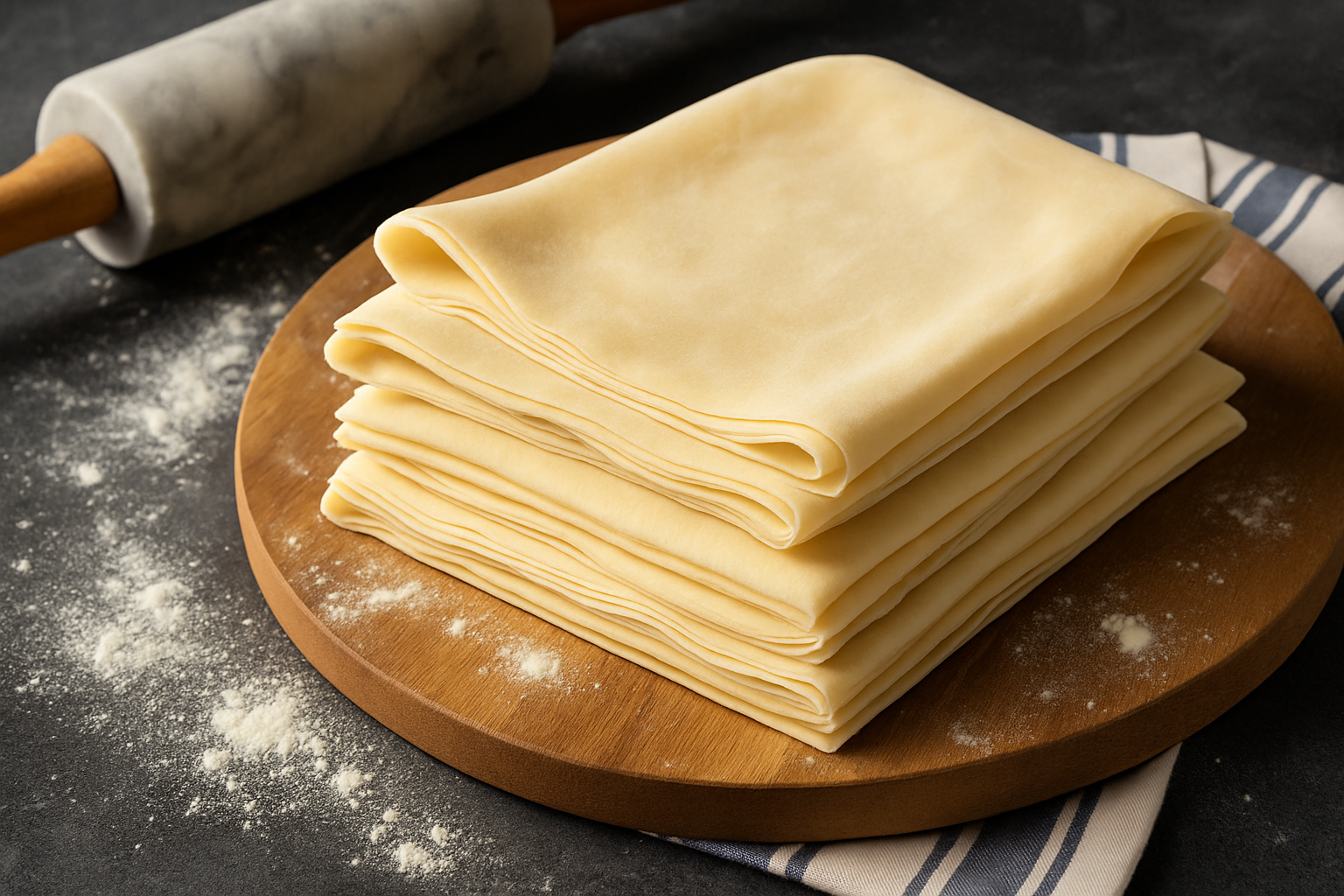
- Stretch to paper-thin: Once you’ve rolled the dough as thin as possible with the rolling pin (about 12 inches in diameter), gently lift it onto the backs of your hands and carefully stretch it from underneath, working in a circular motion. The goal is to stretch it so thin you can almost see through it.
- Layer and store: Place each sheet on a clean, lightly floured surface. Dust lightly with cornstarch before stacking the next sheet on top. Continue until all dough pieces are stretched.
- Use immediately or store: Fresh phyllo is best used right away, but you can store the sheets by layering them between pieces of parchment paper, wrapping tightly in plastic, and refrigerating for up to 2 days. For longer storage, freeze for up to 1 month.
Pro Tips for Perfect Phyllo Dough
- Keep it covered: Always keep unused dough covered with a slightly damp towel to prevent drying out.
- Be patient: The stretching technique takes practice—don’t be discouraged if your first few sheets tear.
- Work quickly: Once you start stretching the dough, work efficiently as it dries quickly.
- Embrace imperfection: Small tears won’t ruin your dish—they’ll be hidden when layers are stacked.
- Humidity matters: On very humid days, you may need slightly more flour; on dry days, your dough might need a touch more water.
Classic Recipes Using Homemade Phyllo Dough
Now that you’ve mastered the art of making phyllo dough, put your skills to work with these traditional recipes:
- Baklava: Layer your phyllo with honey, nuts, and spices for this iconic dessert
- Spanakopita: Create a savory spinach and feta pie
- Tiropita: Craft a delicious cheese pie with your fresh sheets
- Börek: Fill with savory meat and vegetables for this Turkish favorite
- Apple Strudel: A Central European classic perfect for showcasing your phyllo
Troubleshooting Your Phyllo Dough
Even experienced bakers encounter challenges with this delicate pastry. Here are solutions to common issues:
- Dough tears easily: Your dough may be too dry. Add a few drops of water and oil to the remaining dough pieces.
- Dough is sticky: Dust with more flour during rolling and stretching.
- Sheets are too thick: Continue stretching gradually; practice makes perfect!
- Edges dry out: Work faster or keep a slightly damp towel nearby to cover edges.
The Cultural Significance of Phyllo Pastry
Phyllo dough (sometimes spelled “filo”) has deep roots in Mediterranean and Middle Eastern cuisines, dating back thousands of years. The word “phyllo” means “leaf” in Greek, referencing its paper-thin nature. Learning to make this foundational dough connects you to culinary traditions that have been passed down through generations.
With practice and patience, you’ll develop the touch and technique needed to create perfect phyllo dough at home, opening the door to countless authentic Mediterranean recipes.
Authentic Greek Phyllo Dough From Scratch
Ingredients
Method
- In a large mixing bowl, whisk together flour and salt. Create a well in the center and pour in warm water, olive oil, and vinegar. Mix with a fork until shaggy, then knead by hand for 8-10 minutes until smooth and elastic.
- Form the dough into a ball, lightly coat with olive oil, wrap in plastic, and let rest at room temperature for at least 1 hour (or up to 2 hours).
- Dust a large, clean surface with flour. Have additional flour and cornstarch nearby for dusting as you work.
- Cut the dough into 8 equal portions. Keep pieces covered with a slightly damp towel to prevent drying while you work with one piece at a time.
- Working with one piece, shape it into a disc and dust lightly with flour. Using a rolling pin, roll it into a thin circle, rotating frequently and dusting with flour as needed to prevent sticking.
- Once you've rolled the dough as thin as possible with the rolling pin (about 12 inches in diameter), gently lift it onto the backs of your hands and carefully stretch it from underneath, working in a circular motion.
- Place each sheet on a clean, lightly floured surface. Dust lightly with cornstarch before stacking the next sheet on top. Continue until all dough pieces are stretched.
- Fresh phyllo is best used right away, but you can store the sheets by layering them between pieces of parchment paper, wrapping tightly in plastic, and refrigerating for up to 2 days.
Nutrition
Recipe inspired by: https://www.allrecipes.com/recipe/259481/homemade-phyllo-or-filo-dough/